What Is Ink, Anyway?
The substance that powers, paints, and defines the cephalopod world
Ink is the first thing you notice in Splatoon and the last thing the games explain. It is what you shoot, what you swim in, what refills your tank, what splats you, and what covers the ground to decide a match. It is also, in-universe, the substance that Inkling and Octoling society is built on. Piecing together how it works is one of the fandom's favorite pastimes.
Ink as biology
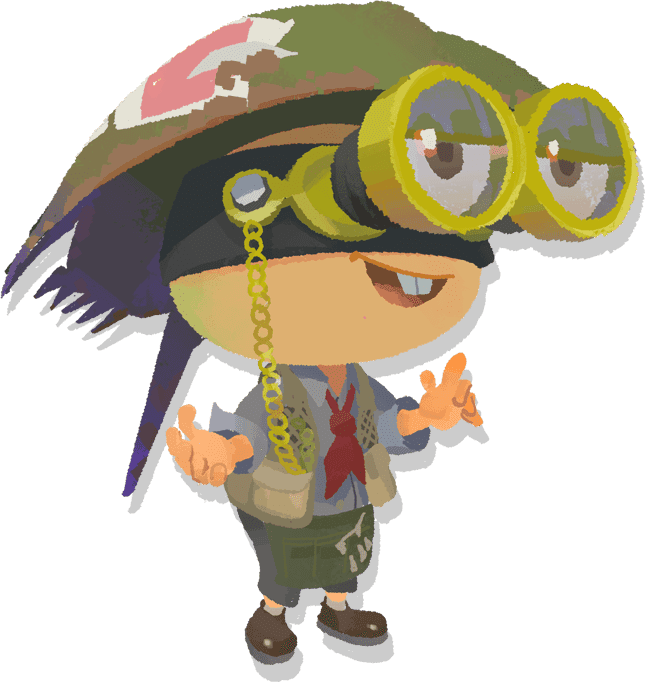
Inklings and Octolings produce their own ink, and it is theirs in a literal sense: an Inkling can only swim through ink of their own team's color. The games treat this as a natural extension of cephalopod biology. Real squid and octopus eject ink as a defense; the Splatoon versions weaponized it. In-game text and Sheldon's chatter imply that the ink tank on an Inkling's back is not the source of the ink but a reservoir, refilled by the wearer when they submerge in their own color.
Enemy ink is the reverse. An Inkling who is drenched in ink of another color is splatted, bursting into a cloud and respawning at their spawn point. In Turf War this is painless and routine. In the Octo Expansion and Splatoon 3 it is treated with more gravity: sanitized ink, the gray substance Kamabo Co. uses, does not just splat, it overwrites, and the Fuzzy Ooze of Alterna does something worse.
Ink as infrastructure
Cephalopod society runs on ink the way ours runs on electricity, and the two are linked. The Great Zapfish generates the power; ink-based equipment consumes it. Spawn points, the pads that reconstitute a splatted Inkling, are Zapfish-powered machinery. So are the inkstrike launchers, the Splashdown, and every Special weapon that dispenses more ink than a single Inkling could carry. Sheldon's Ammo Knights and the Shellendorf legacy are, in effect, an ink engineering industry.
This is why the Octarians' theft of the Great Zapfish is such a threat. Without it, the spawn points fail, the weapons run dry, and Turf War stops. The Octarians, who lost their own war because of a power failure, know exactly which nerve they are pressing.
Ink is what an Inkling is made of, what they fight with, and what they leave behind. It is also, for three minutes at a time, how they keep score.
Ink as culture
Ink color is identity. Splatfest teams are defined by color; idol groups have signature palettes; the Octarians' ink is historically purple and magenta while Inkling ink shifts with fashion. Splatsville's chaos shows in its riot of colors, and the Order Sector's horror is the absence of any. When Side Order restores color to the Memverse, it is restoring the Inkling world's most basic form of self-expression.
There is also the matter of song. The Calamari Inkantation seems to affect ink directly: it rallies Agent 3, disrupts Octavio, and, according to the Octo Expansion, reached Octolings in the domes through some channel more than sound. Fans theorize that music and ink are connected at a level the games never spell out, and that the idols' role in every final battle is not just morale.
What we do not know
The games are careful never to overexplain. We do not know whether an Inkling's ink is the same substance as the ink in a Splattershot cartridge, or whether respawning is a technology or a biological trick. We do not know why water dissolves ink-based creatures or exactly what sanitization does to the will. Every game adds a piece: Tartar's ooze, Grizz's fuzz, Marina's color chips. None of them adds a diagram.
That restraint is a design choice, and a good one. Ink works in Splatoon the way magic works in a fairy tale: consistently enough to build a world on, vaguely enough to leave room for wonder. The kids of Inkopolis do not ask what ink is. They just make sure there is more of theirs on the floor than yours.